
- This event has passed.
Post COVID-19: Building Resilience in Central Asia

The social and economic impacts of the novel coronavirus are amplified in Central Asia, where healthcare resources are limited, supply chains are vulnerable, and government revenues are dependent on a narrow range of commodities produced by extractive industries. While the spread of the disease in Central Asia is moderate, the economic repercussions are more serious. With cross-border trade volumes and commodity prices at historic lows due to COVID lockdown measures, the region’s national governments are straining to implement policy measures that address both disease containment and economic stimulus – a difficult balancing act that if executed poorly could significantly exacerbate the consequences of coronavirus.
The resilience of the region, or the ability of its people, communities, governments and systems to withstand the impacts of negative events and to continue to grow despite them, is being put to the test. The ITIC report, authored by Dr. Ariel Cohen and Mr. James Grant, discusses four primary areas of resilience-building that, if addressed, will enable Central Asia to not only weather the remainder of the COVID storm, but emerge with stronger and more competitive economies that can continue to improve quality of life for its citizens.
Opening Remarks

Ambassador Vakhabov joined the Ministry of Foreign Affairs of Uzbekistan in 2001, serving early career assignments as an attaché, 3rd secretary, and chief of division. In 2006 he was appointed to the Uzbek National Security Council where he was promoted to deputy security of the Council in 2011. . In 2013, Ambassador Vakhabov served as the Director of the Institute for Strategic and Inter-Regional Research, a government-funded think tank in Tashkent. He joined the leadership team at the Foreign Ministry in 2013 as one of four deputy ministers of foreign affairs. In July 2015, he was promoted to First Deputy Minister of Foreign Affairs, the title he held when he was appointed Ambassador to the U.S. in 2017.
 Daniel A. Witt is President of the International Tax and Investment Center (ITIC), a nonprofit education and research organization that serves as a clearinghouse for tax policy and tax administration expertise. Since founding ITIC in 1993, Mr. Witt has promoted best practices on tax, trade, and investment policy in transition economies, by facilitating information exchanges among public-sector officials, private-sector executives, and academic experts. From its initial programs in Russia and Kazakhstan, ITIC’s programs now include participants from 85 countries.
Prior to founding ITIC in 1993, Mr. Witt was Executive Director of the Tax Foundation, and prior to that, Vice President and Director of Membership with Citizens for a Sound Economy. He received a BBA in public administration and an MBA in finance from Western Michigan University.
Panelists
 Dr. Ariel Cohen (Author) is a Senior Fellow at the International Tax and Investment Center (ITIC) where he heads the Energy, Growth, and Security Program (EGS). He is also a non-resident Senior Fellow at the Atlantic Council Eurasia Center and a member of the Council of Foreign Relations. He is a recognized authority on international security and energy policy, and a leading expert in Russia, Eurasia, and the Middle East. Dr. Cohen is the Founding Principal of International Market Analysis Ltd., a boutique political risk advisory.
For over 20 years Dr. Cohen served as a Senior Research Fellow in Russian and Eurasian Studies and International Energy Policy at the Heritage Foundation. He directed Heritage’s energy war games and worked closely with Members of Congress and Congressional staff members as well as cabinet-level and sub-cabinet domestic and foreign decision-makers. Dr. Cohen is the author of six books, 30 book chapters, and over 1,000 articles Dr. Cohen is a regular commentator on Voice of America and Newsweek, as well as a weekly Forbes energy columnist.
 James Grant (Author) is a Research Fellow with the International Tax and Investment Center (ITIC) and Manager of ITIC’s Energy Growth and Security (EGS) program. Mr. Grant is a graduate of the Johns Hopkins School of International Studies (SAIS) where he earned a master’s degree in International Economics. His concentration was Energy, Resources, and the Environment and U.S. National Security. During his tenure at SAIS, James worked as an analyst for the Asia Group in Hong Kong and Washington D.C. where he provided expertise on issues of defense, energy, and finance for corporate clients on both sides of the Pacific.
James is also a Junior Fellow with the American Foreign Policy Council (AFPC) where he specializes in global energy markets, geopolitics, and U.S. national security. He is a frequent contributor to The National Interest and his commentary can also be found in The Washington Times, Bloomberg, Forbes, Newsweek, The Diplomat and The Journal of Energy Security. He is a class of 2018 Securing America’s Future Energy (SAFE) Energy Security Fellow.
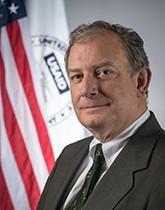 Javier Piedra serves as the Deputy Assistant Administrator of the Bureau for Asia, where he provides oversight and management for the South and Central Asia and Technical Services portfolios.
Piedra received his master’s degree in international affairs from John Hopkins University School of Advanced International Studies, a bachelor’s degree in history from Boston College and attended Manufacturers Hanover Bank’s Management Training Program in Finance, Economics, and Banking. He is fluent in Russian and Spanish.
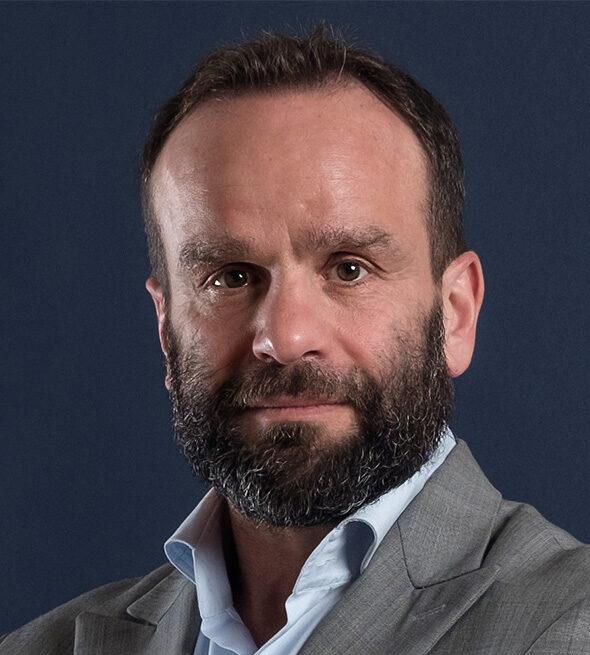 Eric Livny joined the EBRD in September 2019 as Lead Regional Economist for Central Asia. In his current role with the Bank, Eric advises senior management on the Bank’s country strategies, liaises with governments and international financial institutions, and leads the industrial policy stream within the Bank’s Community of Practice on Competition Policy. In 2007-2018, Eric served as President with the International School of Economics in Tbilisi (ISET) and the affiliated ISET Policy Institute. In this capacity, he consulted the Georgian government, international organizations, and business associations on a very wide range of policy issues from education and labor market reforms to industrial policy, rural development and agricultural policies, quality of the business environment and national competitiveness. In 2015-2017, Eric advised Georgia’s ministers of Economic and Sustainable Development Dimitri Kumsishvili and Giorgi Gakharia. Throughout his career, Eric was involved in the creation and management of several world-class education start-ups in the former USSR, including the New Economic School in Moscow, the Kyiv School of Economics (KSE), and the International School of Economics at Tbilisi State University (ISET).
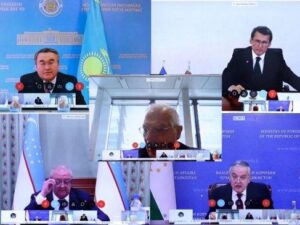
Photo: Foreign Ministers of Central Asia and the EU Discussing Joint Actions to Eliminate the Consequences of COVID-19. Photo from SNG. Today.
RSVP