
- This event has passed.
Late Soviet Central Asia: Colonialism vs Nationalism
15 December, 2020 @ 9:00 AM – 10:30 AM

Мероприятие пройдет на русском, с вопросами на русском и английском языках.
This event will be held in Russian with questions in English.
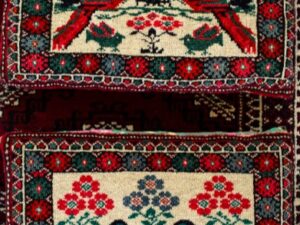
Как колониальное и национальное проявляется и сосуществует в нарративах таджикской интеллигенции, казахской оперы и туркменских коврах? Эти вопросы обсуждаются на семинаре с участием Артемия Калиновского, Нари Шелекпаева Модераторы дискуссии: Марлен Ларуэль и Сергей Абашин.
How does colonialism and nationalism coexist and are expressed in the narratives of Tajik intelligentsia, Kazakh opera and Turkmen carpets? These questions are discussed at a seminar with Artemy Kalinovsky, Nari Shelekpaev Moderators of the discussion: Marlene Laruelle and Sergey Abashin.
Topics and Speakers
Артемий Калиновский
Призывники социализма: таджикская интеллигенция и деколонизация по-советски
Это исследование рассматривает траектории представителей интеллигенции центральной Азии, которые получили высшее образование в 1960-х и 1970-х годах. Опираясь на мемуары, архивные источники и устную историю, автор рассматривает их реакцию и участие в советской антиколониальной политике и то, как это участие повлияло на их отношение к самому Советскому Союзу. в статье раскрывается потенциал постколониальной теории в попытке осмыслить отношение этой интеллигенции к понятию «нация» в советскую и постсоветскую эпохи.
Artemy Kalinovsky
Conscripts of Socialism? The Tajik Intelligentsia and Soviet-Style Decolonization
This research examines the trajectories of Central Asian intellectuals who were educated in the 1960s and 1970s. Drawing on memoirs, archival sources, and oral history, it considers their response to and involvement in Soviet anti-colonial politics, and how this involvement may have shaped their attitude towards the Soviet project itself. Finally, the article considers some of the ways that postcolonial theory helps make sense of these intellectuals’ attitudes towards the nation in the Soviet and post-Soviet eras.
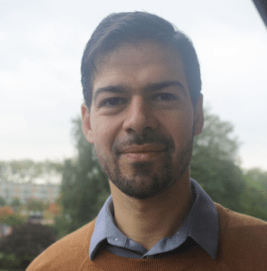 Artemy Kalinovsky, Professor (Professor of Integrative Knowledge – PIK) at the College of Liberal Arts. Dr Kalinovsky latest book, Laboratory of Socialist Development: Cold War Politics and Decolonization in Soviet Tajikistan, focused on the politics and practices of development in Soviet Central Asia and places the Soviet experiment in a global context. The book won the 2019 Davis Center Prize for a monograph in anthropology, sociology, political science, or geography of Russia or the post-Soviet space, and the Hewett prize for for a monograph on the political economy of Russia or the former USSR. Artemy is also the author of A Long Goodbye: The Soviet Withdrawal from Afghanistan (Harvard University Press, 2011), and co-editor with Sergey Radchenko, of The End of the Cold War and the Third World (Routledge: 2011), as well as the Routledge Handbook of Cold War Studies with Craig Daigle (2014). More recently, he co-edited, with Michael Kemper, Reassessing Orientalism: Interlocking Orientologies in the Cold War Era (2015) and Reconsidering Stagnation: Ideology and Exchange in the Brezhnev Era (Lexington, 2016), with Dina Fainberg. Artemy’s academic work has appeared in Cahiers du Monde Russe, Ab Imperio, Kritika, Contemporary European History, Humanity, the Journal of Cold War Studies, Cold War History, and a number of edited collections. His writing has also been published in Foreign Policy, National Journal, Foreign Affairs, and the Washington Post. Artemy has a PhD and an MA from the LSE in International History and a BA from the George Washington University.
Нари Шелекпаев
Заимствованные традиции, завуалированные связи и карго-культы: опера и столичные города (на примере Алматы и Астаны) Это исследование представляет собой обзор, охватывающий период более четырех веков, исторической ко-конструкции между оперой и городами столицами, а также процесса легитимации, которой опера наделяет столицы как их давний и устойчивый атрибут. Это исследование сначала предлагает взглянуть на то, как ранняя опера возникла в европейских столицах в 17 веке, затем на то, как опера и столицы развивались в 18 и 19 веках, и, наконец, на появление оперы в неевропейских столицах с середины 19 века. Далее, я разбираю подробно историю создания оперы в бывшей и нынешней столицах Казахстана. Это исследование, учитывая его временной охват, не ставит своей целью дать исчерпывающий обзор истории опер и оперных театров во всех столицах прошлого или настоящего. Скорее, он направлен на то, чтобы выделить и подвергнуть сомнению практики и намерения тех акторов, которые апроприировали оперу – изначально итальянскую форму искусства – особенно в незападном контексте.
Nari Shelekpaev
Borrowed Traditions, Veiled Connections, and Cargo Cults: Opera and Capital Cities (case studies of Almaty & Astana)
This research provides an overview, spanning over four centuries, of the historical co-construction between opera and capital cities as well as the legitimation, which the former arguably provides to the latter as its long-standing and persistent attribute. For doing so, this research first suggests to look on the way the early opera emerged in the European capitals in the 17th century, then the way the two codeveloped in the 18th and 19th centuries, and finally the arrival of opera to non-European capital cities, a trend that emerged in the mid-19th century and continues until today. It also analyses, in a more detailed manner, the operatic history of Kazakhstan’s former and current capital cities to buttress the claims on an entangled connection between the history opera and that of contemporary capital cities. This research, given its timespan, did not aim to provide an exhaustive overview of the operatic history of past or present capital cities. Rather, it aims to highlight and question the practices and intentions of those who appropriated opera – originally an Italian form of art – for political and other reasons, especially in the non-western context.
 Dr. Nari Shelekpaev, Associate Professor, Department of History, European University at St. Petersburg. Dr Shelekpayev specializes in the intellectual history, comparative history of empires in the 19th and 20th centuries, as well as Soviet and post-Soviet history. He was the 2018 Albert Einstein Fellow and scholar-in-residence of the Einstein Summer House at the Einstein Forum and Daimler & Benz Foundation in Potsdam, Germany. Previously, he was Visiting Research Fellow at Free University in Berlin (2016-2017), Scholar-in-Residence at the Canadian Center for Architecture (2015), and Associate Doctoral Fellow at the IRTG ‘Diversity,’ formed by Université de Montréal in Canada and Universities of Trier and Saarbrucken in Germany (2016-2019). Nari has taught at Université de Montréal (2016), Università di Roma La Sapienza (2018), and Eurasian University in Astana (2015-2016).
Moderators
 Marlene Laurelle, Director, Institute for European, Russian, and Eurasian Studies; Director, Central Asia Program; Co-Director, PONARS-Eurasia; Research Professor of International Affairs.
 Sergey Abashin, Professor, Department of Anthropology at the European University at St. Petersburg