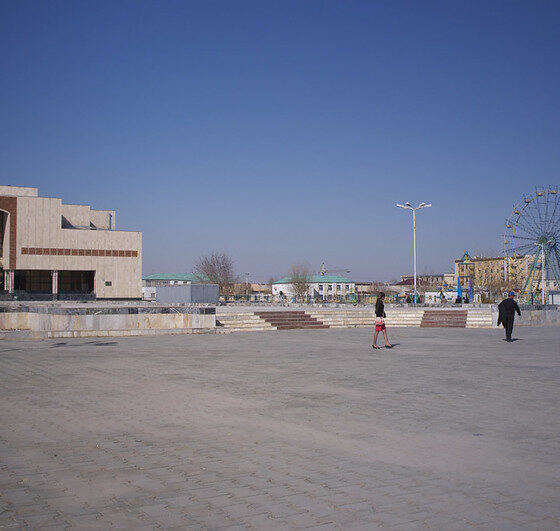

In a world where the visual is becoming an integral part of knowledge, visuals can also express scholarly knowledge.
As such, for the 2019 conference, CESS organized its first-ever photo contest under the title: “The Researcher and His/Her Fieldwork in Central Eurasia“. In the gallery below, scholars and journalists present their photos that reflect on the relationship between the researcher and the object of research and illuminate the different faces of fieldwork.
Photos by:
Abel Polese, Aksana Ismailbekova, Alexandru Badarau, Assel Choibekova, Cara Kerven, Catherine Ploskonka, Christian Kelly Scott, Everett Price, Jennifer Murtazashvili, Katerina Zach-Kozlova, Liliya Karimova, Matthew Brown, Moira O’Shea, Rashid Gabdulhakov, Farit Gabdulhakov, Verena La Mela, Nyani Quarmyne, Laura Salm-Reifferscheidt and Talant Sultanov
Click on the gallery below to view photos and descriptions:


The RO-CRESS 2018 expedition
Involving 11 researchers from Babeș-Bolyai University and ”Vasile
Fati” Botanical Garden from Romania. Researchers aimed to collect a large number of soil and tree-ring samples along a 12,000 km transect from eastern Europe to eastern Asia to analyze the effect of climate change on the central Eurasian environment. Here is the usual work day in the Republic of Buriatiya, Russian Federation. Researchers on the left are collecting soil samples while the researcher on the right is
taking a photograph of an iconic member of the Central Eurasian flora:
Papaver nudicaule, the golden steppe poppy.
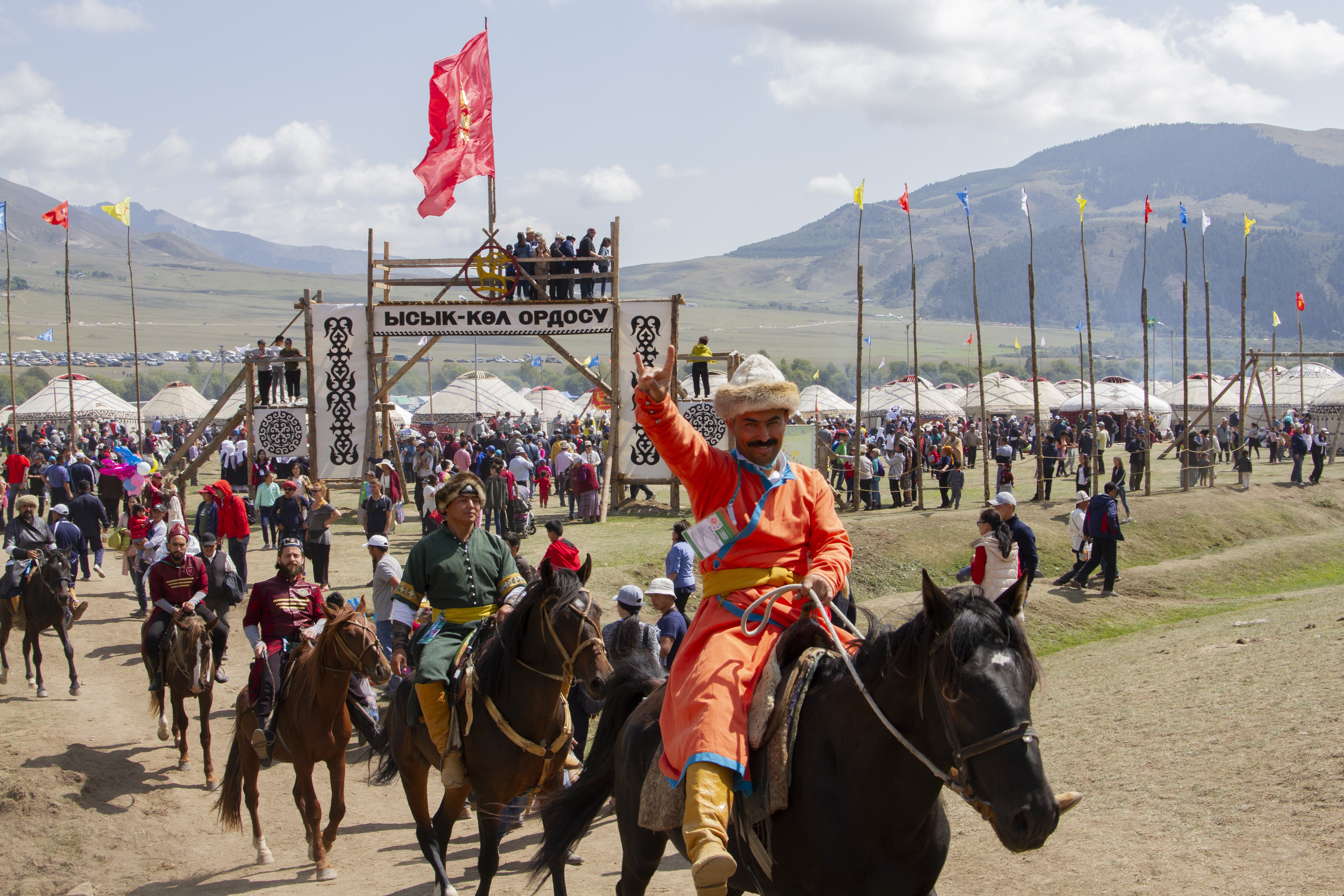
The World Nomad Games took place in Kyrgyzstan on the “shoe
side” of lake Issyk Kul. Surrounded by the jagged peaks of the Tian
Shan mountain range and the vast meadows of a sweeping mountain
Kyrchyn Gorge, Issyk Kul is the second largest alpine lake in the
world
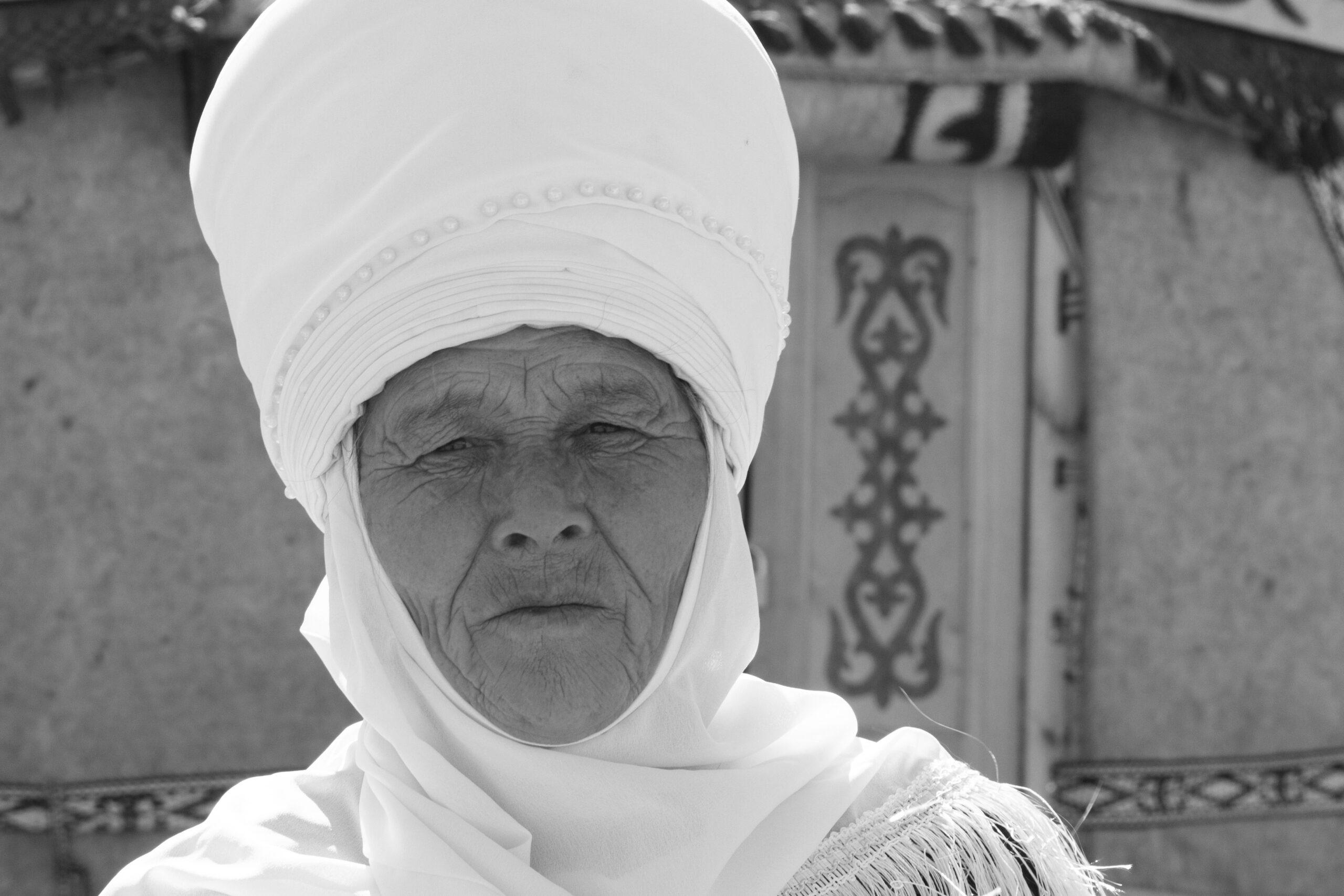
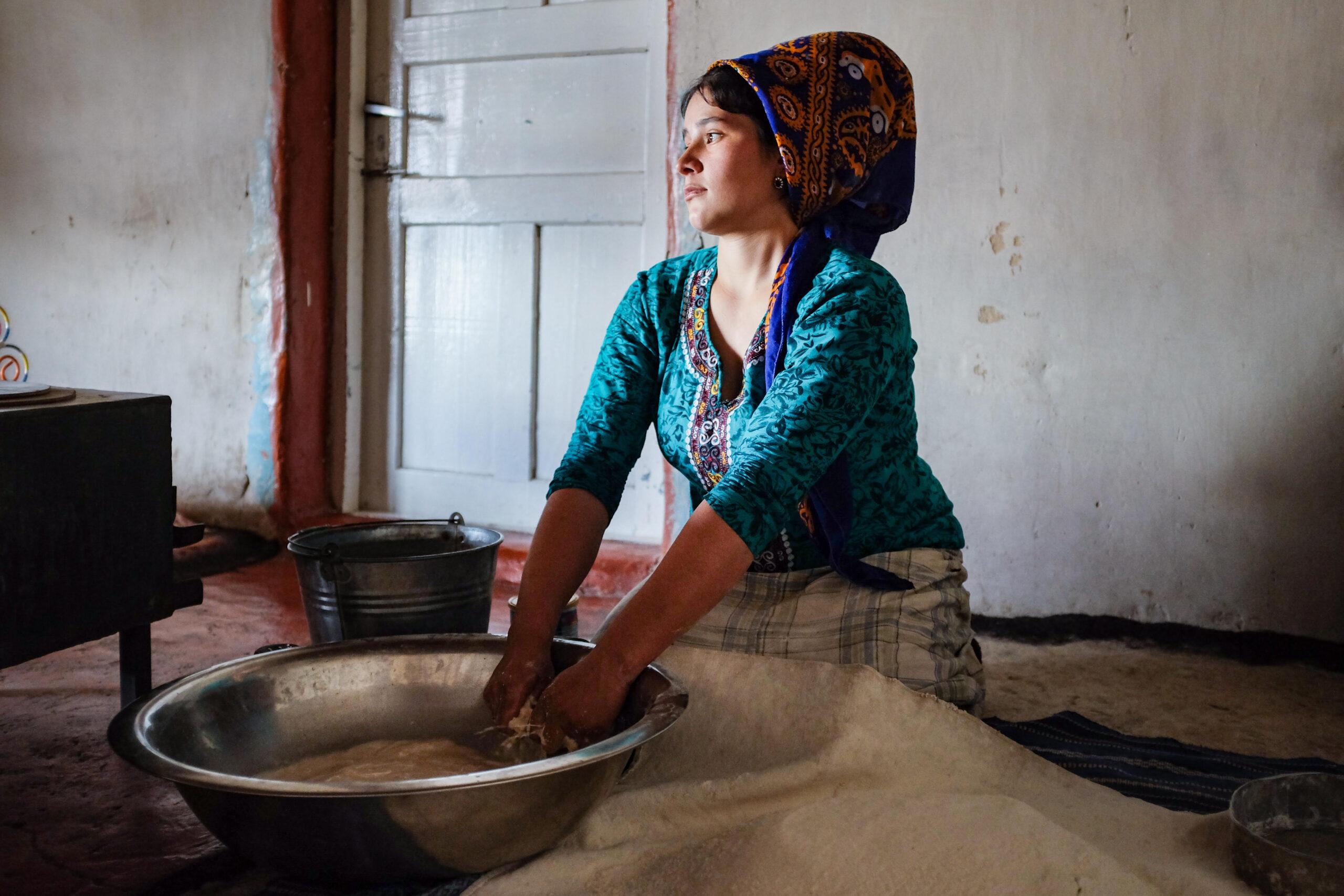
kneads bread for her husband’s family. After letting the dough rise,
she will take it outside to the clay oven (tamdyr) and secure the loaves
to the hot walls inside. The tedious process of cleaning the baked
loaves is shared between her and her husband’s brother’s wives (elti).
She wears the appropriate silk scarf (gýnaç) of a married women and, when in the presence of older men, secures a portion of the scarf in her mouth (ýaşmak).
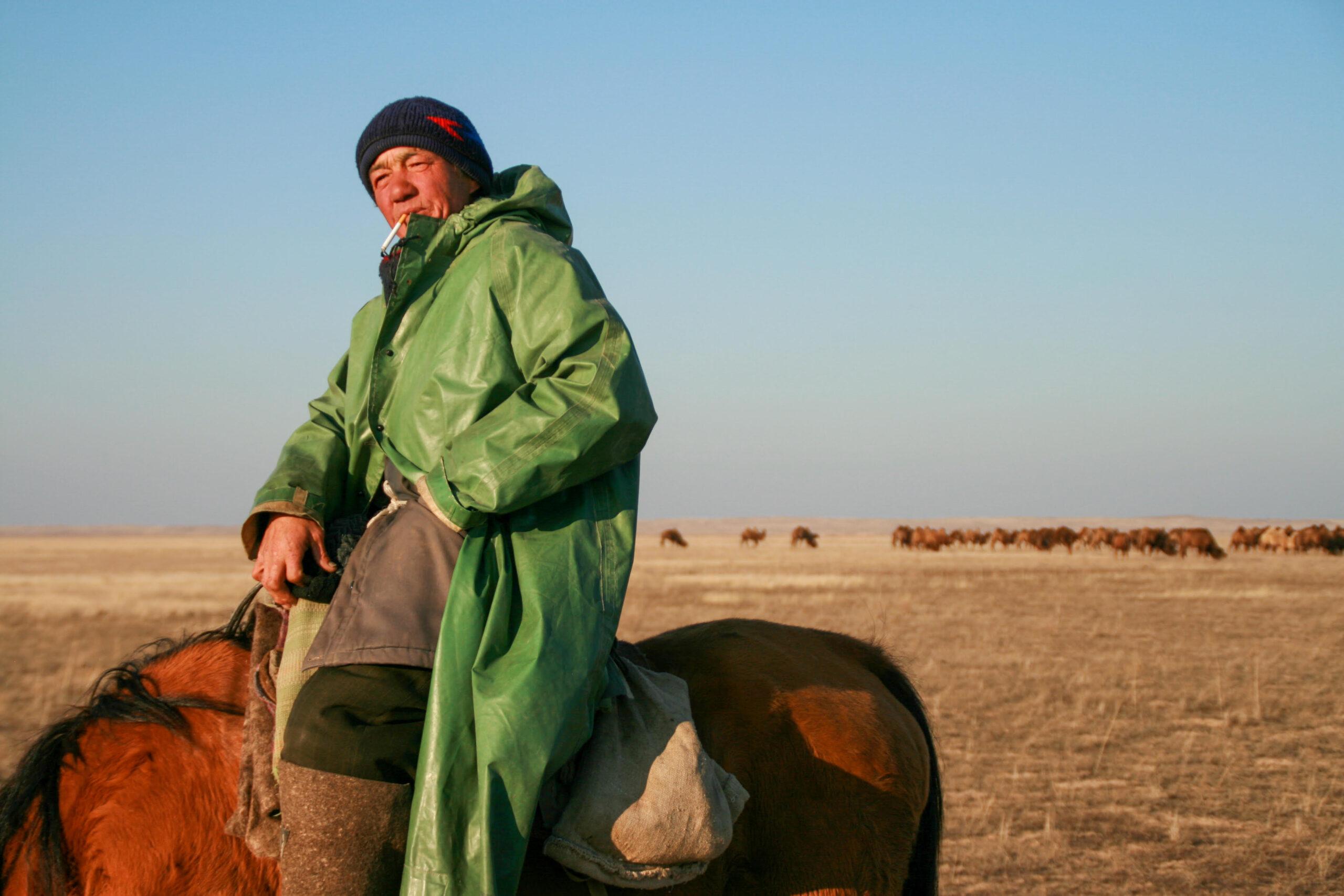

district in Gorno-Badakhshan Autonomous Region, Tajikistan. Many
families lease their livestock to hired shepherds. Here, the wife of a shepherd pours yogurt (ayran) made from yak’s milk to take with us back into Murghab town


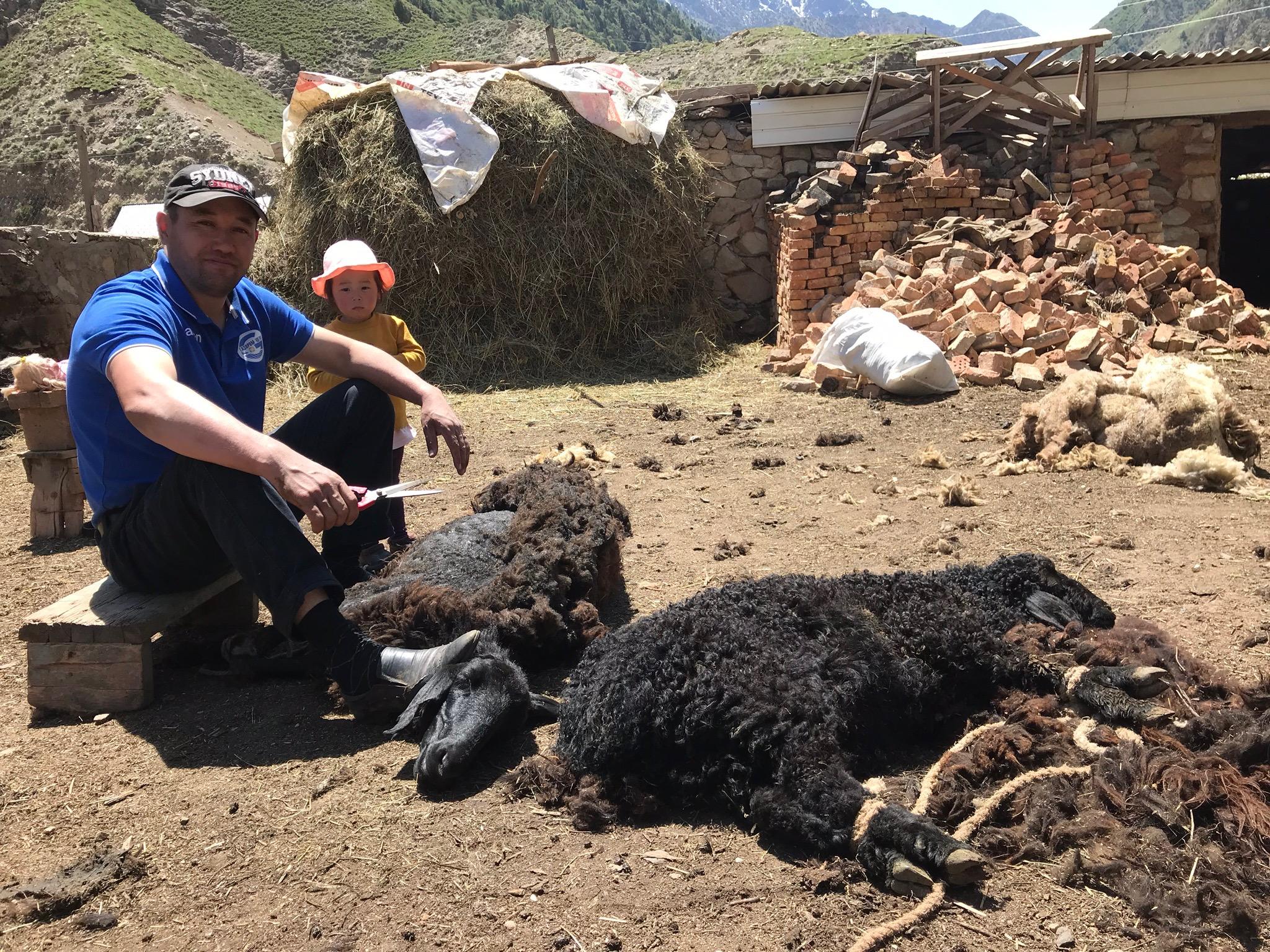
fieldwork. Bayaliyev was one member of the Kyzyl Traktor Group,
the first avant-garde movement to emerge in Southern Kazakhstan
after perestroika. . Playing with the notions of self-Orientalisation
within post-Soviet Kazakhstan, Kyzyl Traktor (Red Tractor) Group
used Eastern mysticism, such as shamanistic practices and the iconic
image of a wild nomad turning tradition and ritual into performance
art. In this photo Bayaliyav spontaneously plays and dances along
the lines of the shamanistic performances the group was known for.
The intensity of these performances increased into the early 2000s;
as group dynamics changed, individual projects formed along mutlithematic lines such as nomadicism, ritual and identity.

and Cooperation in Europe (U.S. Helsinki Commission) traveled to
Bukhara, Uzbekistan as an official delegation to investigate the state
of religious freedom in the country. This picture was taken by one of
the advisors during a meeting with the Bukhari Jewish community in a
local synagogue.

blue building has the word “MAGA” spray painted on it. I thought
this to be an unusual place to find MAGA propaganda. I’ve spoken
to friends from the area to see if the photo may have more local
meaning. There was no consensus on this. The juxtaposition of the
spray-painted car was also quite interesting.


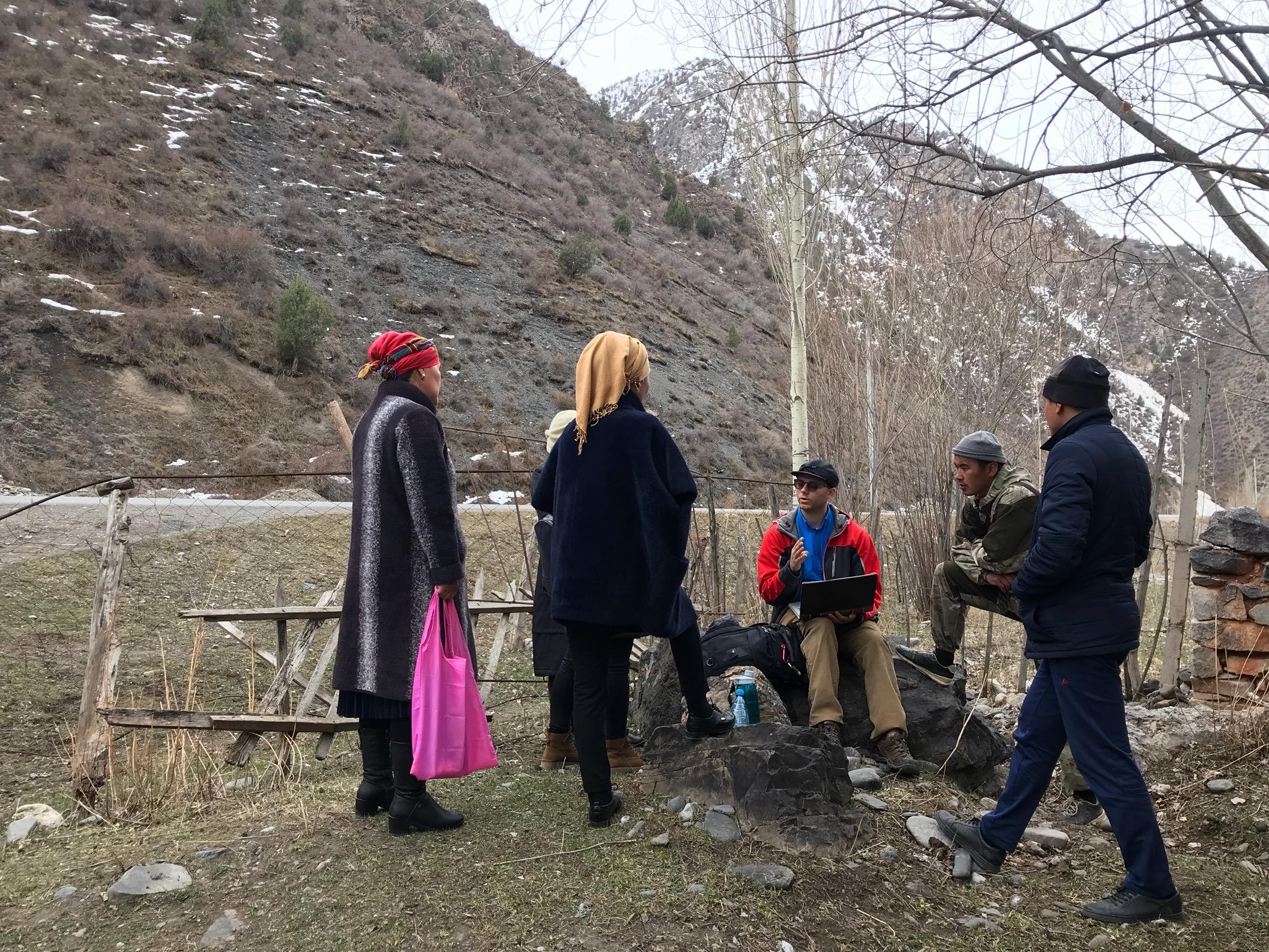
Kateřina Zäch-Kozlová (PhD Student in Human Geography – University of Fribourg, Switzerland). I looked at the water infrastructure and explained how the technical functionality of wells has changed overtime. In this perspective, I showed the difficulty between the local weather climate and wells’ technical conditions.

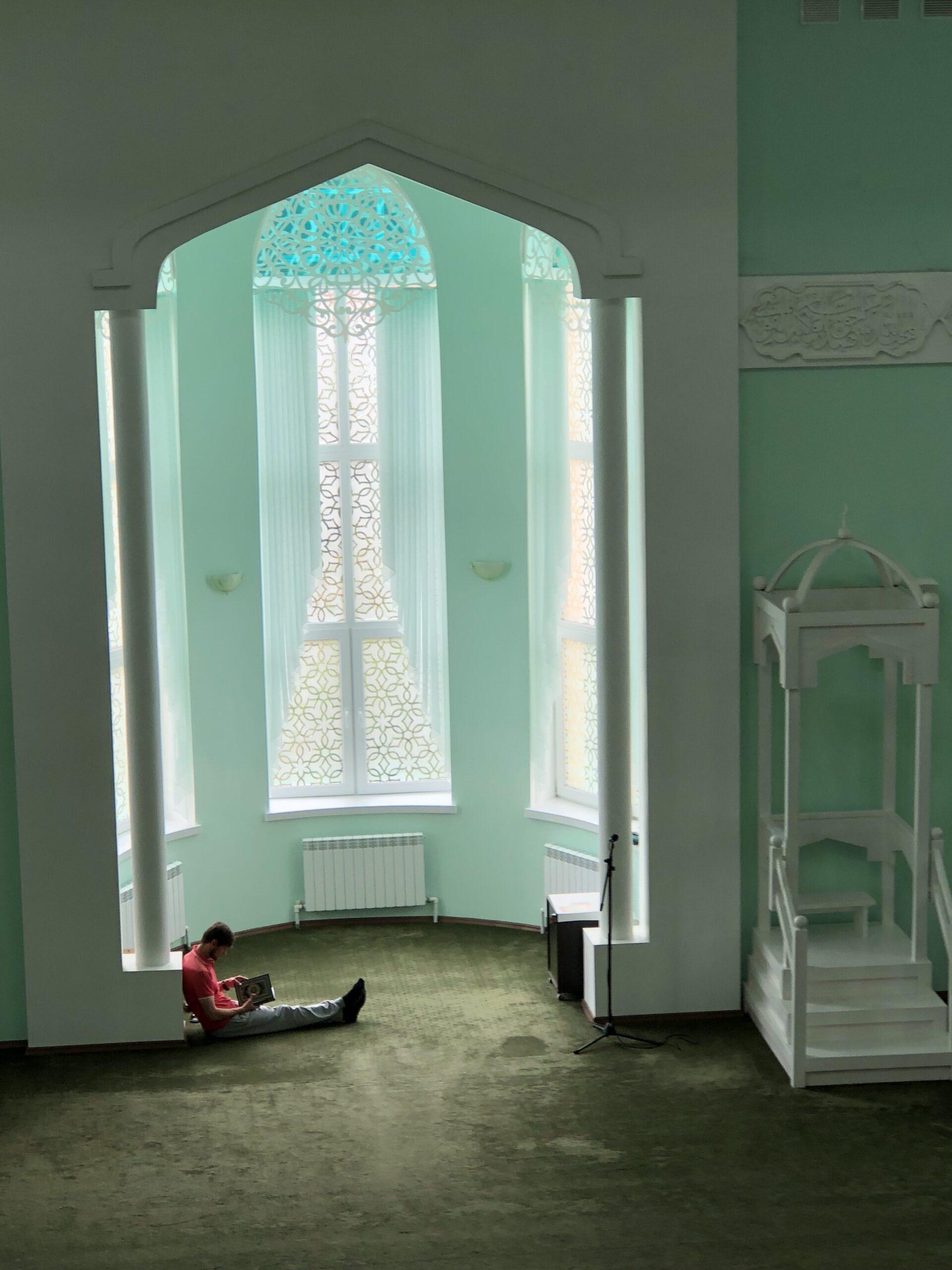
Tatarstan, Russia. I came to the newly-built mosque in a small town
outside of Kazan to meet with a Muslim Tatar woman I wanted to
interview. While waiting for the woman in the balcony—the women’s
prayer section of the mosque—I peeped from behind the vertical
blinds that blocked the view from the balcony onto the main floor, the
men’s section. My female ethnographic gaze fell on a man who settled
on the floor with a copy of the Qur’an. While the man could not see
me, I could see and photograph him.

This photo was taken in June of 2016 in the Suusamyr Valley of
Kyrgyzstan through a bus window. I was in Bishkek for a summer
language program and knew next to nothing about Central Eurasia.
This is one of many such scenes I viewed from our school bus as
it took us around the country, and I wanted nothing more than to
transcend that glass and learn more.
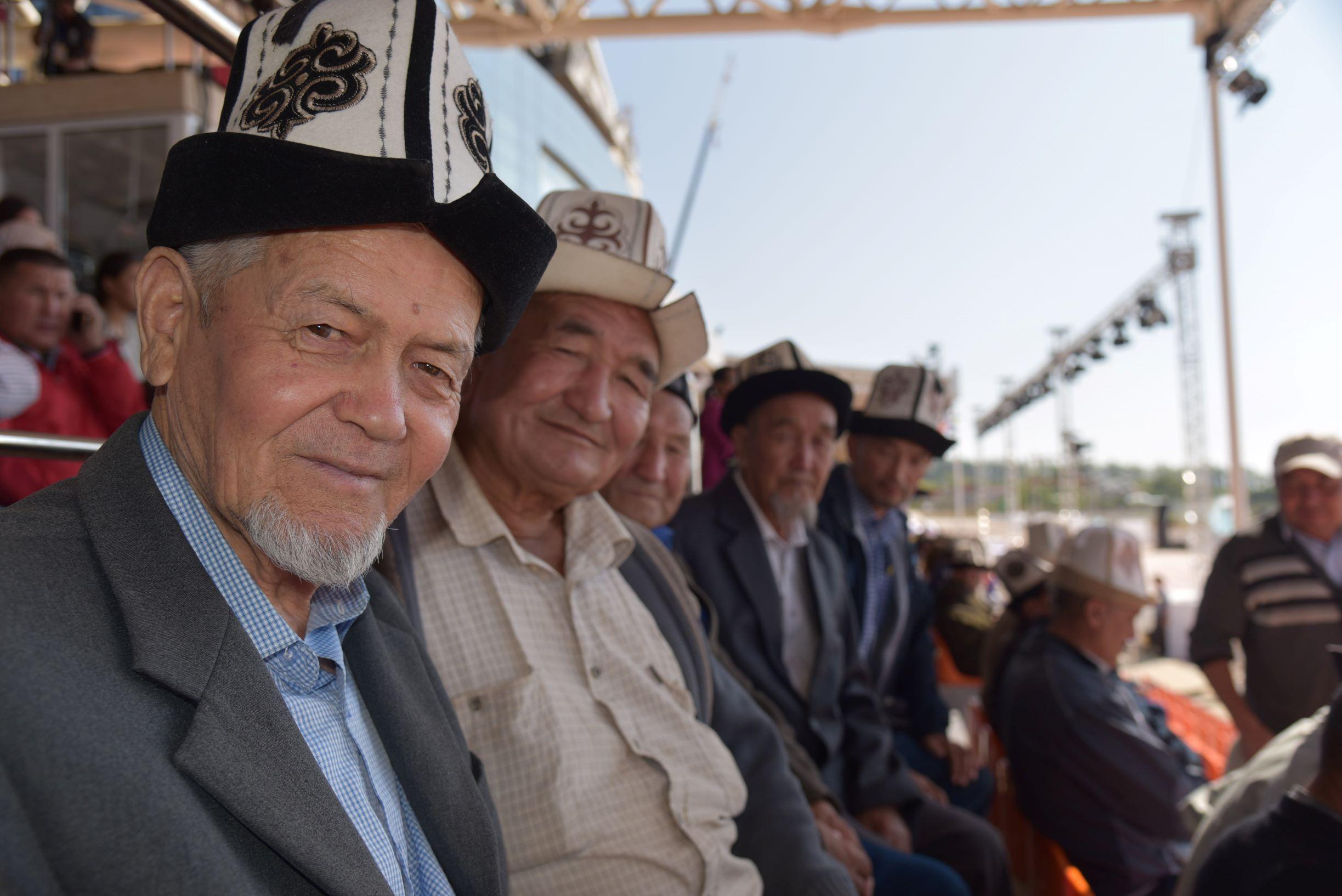
friendly with some of the fans who also watched every match, like this
group, some of whom had come from Jalal-Abad together. Sitting
with them was an education in the skills and characteristics one needs
to become a good Kok-boru player, as well as an opportunity to hear
stories about their own adventures, and sometimes misadventures,
when playing the game.
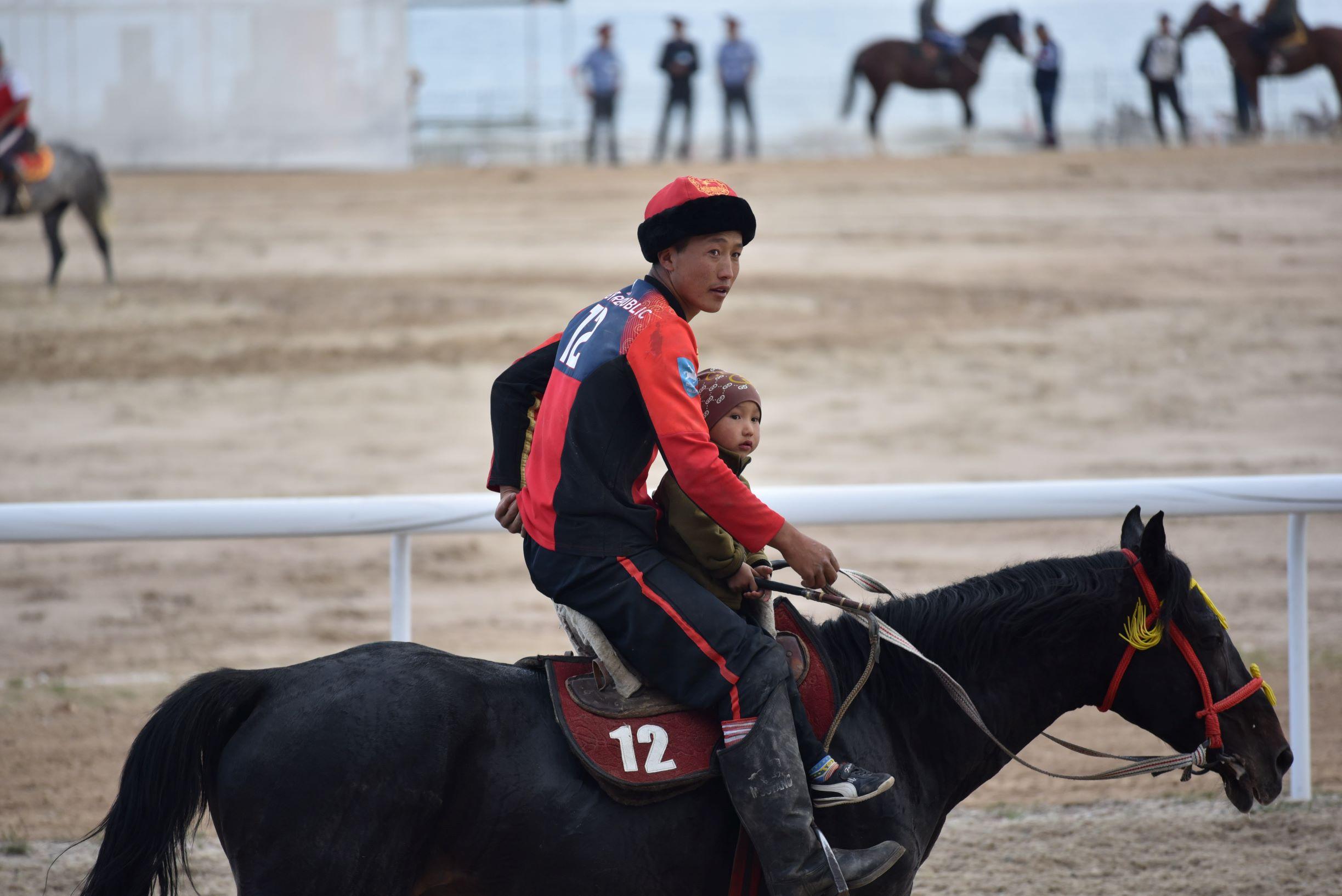
to conversations about the origin of the game, about which country’s
rules to use in international games, and the mutual understanding
between a rider and his horse. One idea that has stood out, however,
is the idea that Kok-boru is something that is in the blood and which
is not explicitly taught but rather demonstrated. To me, this picture,
taken after Kyrgyzstan won the final match during the World Nomadic
Games in 2018, illustrates the sharing of knowledge of the game from one generation to the next. Cholpon-Ata, Kyrgyzstan.

Winning the Mayor’s Cup during this game certainly meant big
things for the team as they were able to compete in the Victory Day
celebrations and have a chance to move from the semi-professional to
professional league. While Kok-boru is a game with an ancient history,
it is simultaneously being popularized and formalized in Kyrgyzstan
with the creation of two leagues, and much attention being payed to
international standards for the game. Bishkek, Kyrgyzstan, 2019.

An old man from the fairytale ‘1001 nights’ at Chorsu bazaar in the
centre of Namangan. He is captured here selling “misholda” – a local
marshmallow-like sweet substance served during the holy month of
Ramadan.

ancient city of Akhsikent. Destroyed by an earthquake in 1622,
Akhsikent was a city with well-developed metallurgy. Swords produced there were widely sold all over the region, including in the famous markets in Damascus. After the earthquake, Namangan was founded by a surviving resident of Akhsikent.
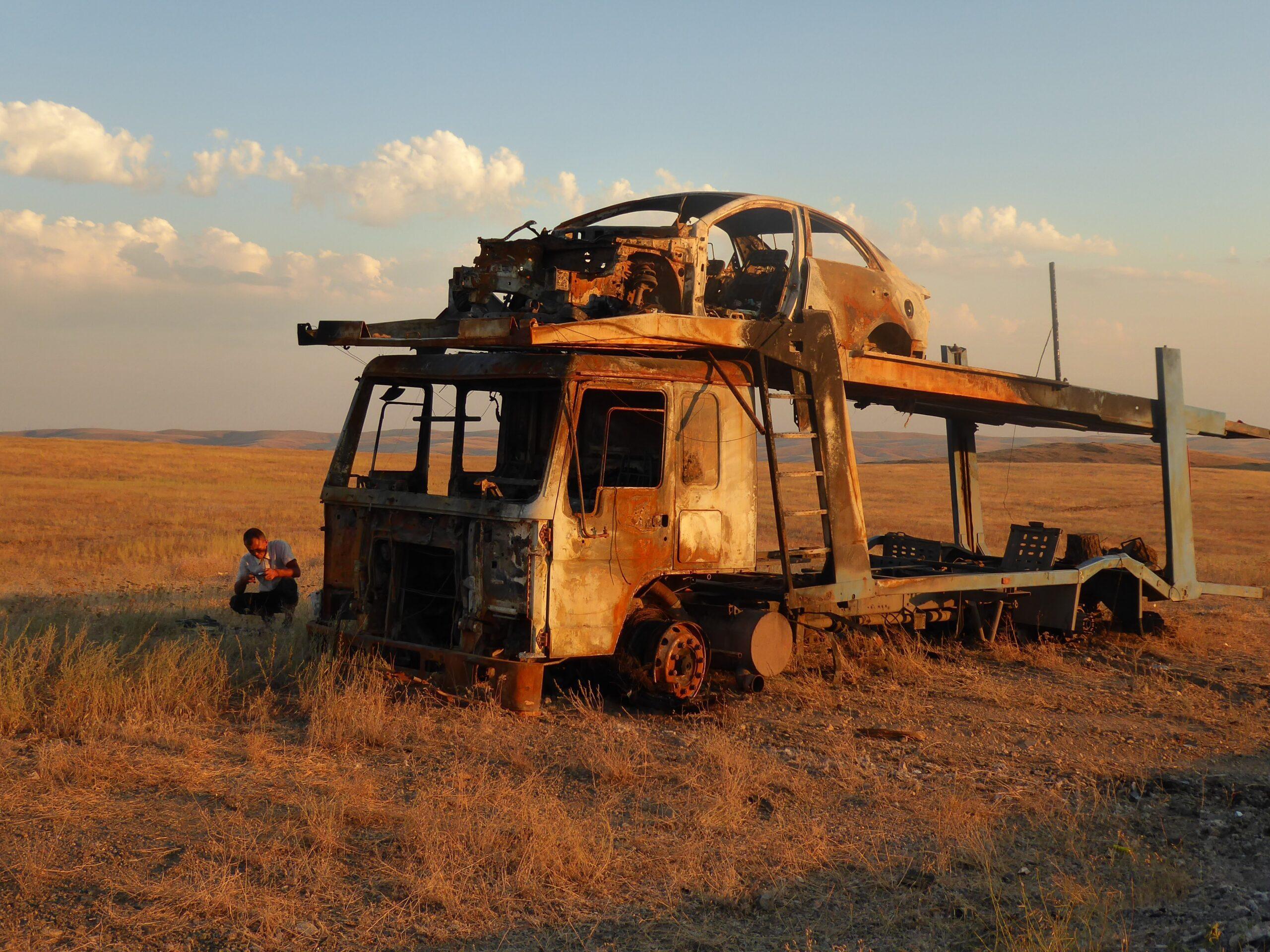
Between 2016 and 2019 I studied trade and infrastructure in the SinoKazakh borderlands. As a social anthropologist my method to approach
roads anthropologically was to participate in traffic as a driver.
Female drivers are an unusual sight in rural Kazakhstan. Often I was
confronted with the prejudices of male drivers, corrupt traffic police,
sexual harassment and frequent road accidents or its relics as is shown
on the picture. Death is a constant companion on Central Asian roads.